

Doors, Lights, & Hardware
General:
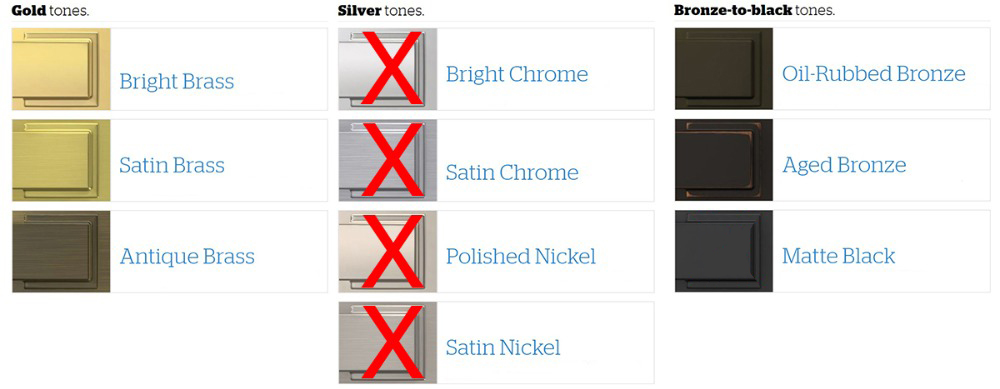
Replacement porchlights and door hardware should all be of a “traditional” or “Colonial” style to match the original design of the neighborhood. Acceptable finishes are Gold tones and Bronze-to-black tones. Silver tones like chrome, nickel and pewter are not acceptable. All finishes on porchlights, door hardware, and address plaque numbering should match.
Front Porch Lights:
Replacement front porch lights must be as similar as possible to the originals. Exact replacements are, for the most part, no longer available. However, a wide range of lights are available in stores and online at all prices. Replacement front porch lights should be:
- As close as possible to the size, shape and finish as the original
- Traditional or colonial style (severely contemporary or "Spanish" style unacceptable)
- Mounted in original location
Address plaques:
Per Baltimore County law and fire prevention codes, all residential address plaques must remain clearly visible from the roadway so first responders can quickly locate houses during emergencies. Address markings must follow these standards:
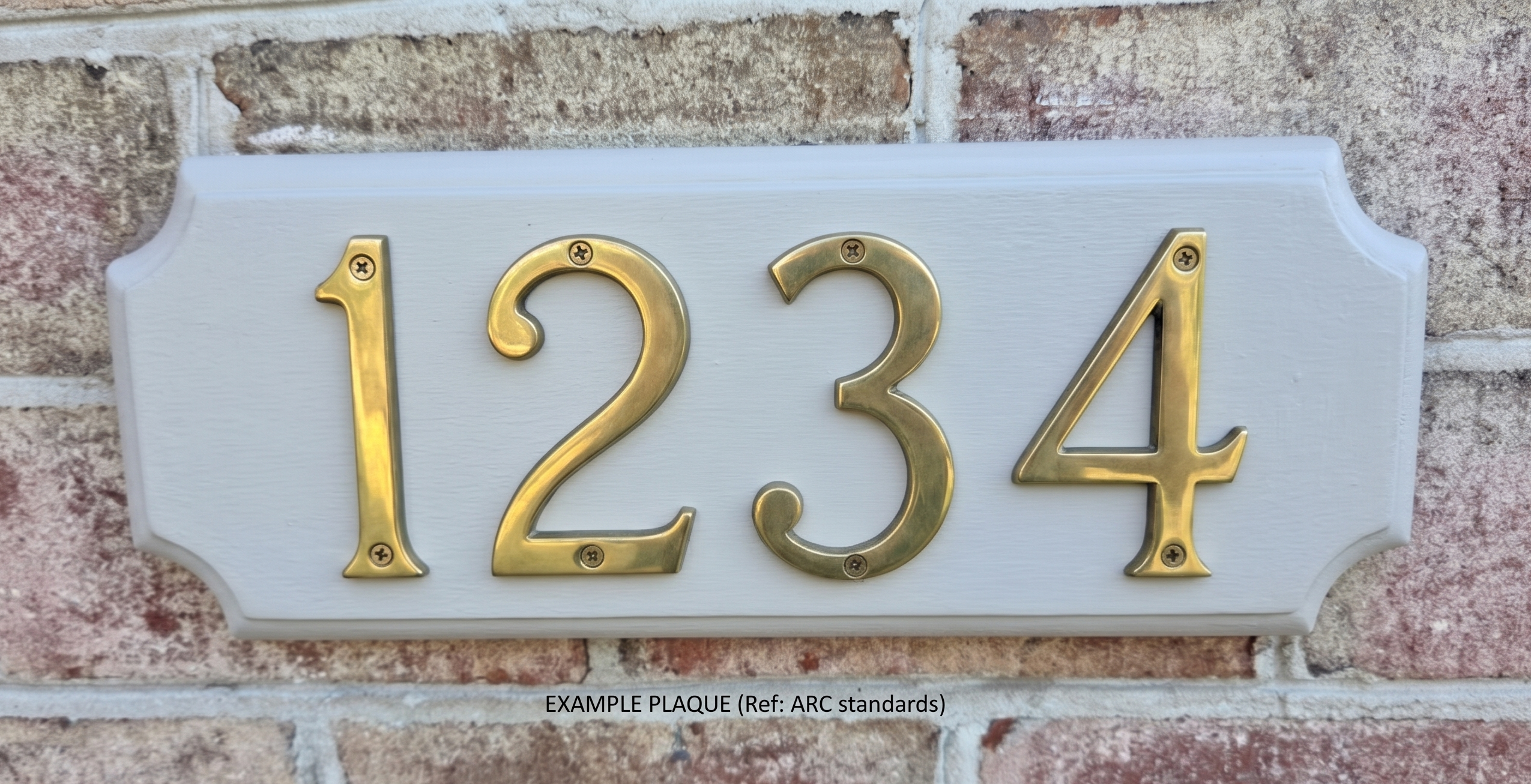
- Numbers must be surface-mounted horizontally onto a solid wood plaque with a beveled decorative edge (as close to the original as possible). The plaque must be painted to match the house's assigned TRIM color (refer to the Colors & Painting section) and be secured directly to the brick exterior.
- Numbers must feature a classic serif font with varying stroke weights and be attached using matching hardware through factory-drilled holes.
- Only gold tones (polished brass, satin brass, antique gold) and bronze-to-black tones (oil-rubbed bronze, aged bronze, matte/satin black) are permitted. Silver tones like chrome, nickel and pewter are not acceptable. See “Currently approved finishes” image above.
Rear Porch Lights:
The small lights near the doors to the deck and lower patio may be replaced with more decorative units with the following specifications:
- As close as possible to the size of the original
- Traditional or colonial style (severely contemporary or "Spanish" style unacceptable)
- Mounted in original location
Door Hardware:
- Doorknobs and locks should be very close to the originals in design
- Electronic locks and/or door mounted closed circuit cameras are acceptable with approval from the ARC
- Door knockers may be replaced with a different design, as long as it is the approximate size of the original.
- “Kickplates” of any type or finish may not be added to the bottom of a front door or storm door.
Storm Doors
Storm doors made of wood or aluminum are an acceptable addition to the home but must meet the following specifications.
Color:
For both wood and aluminum doors, the color must match the original color of the interior front door. You can find your colors on the “Colors & Painting” section of this website (CLICK HERE).
Type:
- May be made of wood or aluminum
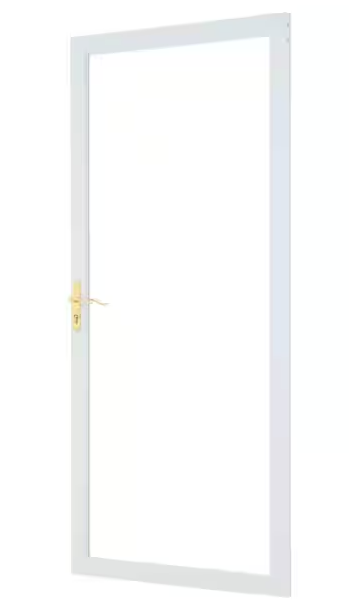
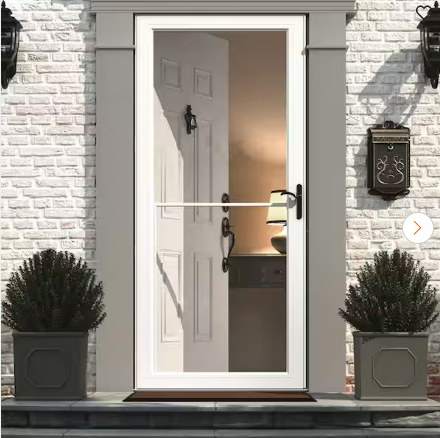
- Full view style (approximately 28” X 72” glass) with removable screen and glass window
- Alternatively, glass may be full view style in two sections with a retractable built-in screen*
Not Permitted:
- “Pet grilles,” decorative appliqués or molding
- Painting of screens
- Metal “security doors” with bars or other types of special protection
Replacement Doors
Front Doors:
Replacement front doors must match the function and appearance (six panel, no windows) of the original units and be painted in the original color (see website for list of colors).
- Doors may be made of metal (like the originals) or Fiberglas.
- Doors must be mounted to swing in the same direction as the original.
- Pet doors are not allowed.
Deck Doors (First Floor):
Replacement deck doors must match the general appearance of the original units: a center door flanked by a stationary panel to either side.
- The door may be either a slider or swinging style. If a swinging style is chosen, it must open to the inside of the house like any exterior door.
- The unit may be made of wood or Fiberglas.
- The exterior and interior surfaces may be of wood, vinyl or metal.
- The entire unit must be trimmed on the exterior with “brick molding,” which may be made of wood or vinyl.
- The exterior must either be white or match the original color of the home’s front door. If the deck door is painted in the original color, the trim must be painted to match the original color as well.
- Glass may either be a single undivided pane or divided by mullions into 15 smaller panes (“lites”) to match the deck door: three panes wide by five panes high on both the door and the stationary panels.
- Mullions (pane dividers) may be mounted on the interior of the unit (permanently or removably) or between the panes of glass.
- See top of page for approved finishes. White is also an acceptable finish on rear doors.
- Metal security doors with bars or other theft deterrent features are not allowed. However, the owner may install a single security bar ("Charlie bar") on sliding doors.
Patio Doors (Lower Level):
Replacement patio doors must be the same size and general type of the original: that is, one moving door and one stationary panel.
- The door may be either a slider or hinged swinging style. If a swinging style is chosen, it must open to the inside of the house like any exterior door.
- Both the door and stationary panel must be “full view,” that is, the glass extends to near the top and bottom and to both sides.
- Glass may either be a single undivided pane or divided by mullions into 15 smaller panes (“lites”) to match the deck door: three panes wide by five panes high on both the door and the stationary panel.
- Mullions (pane dividers) may be mounted on the interior of the unit (permanently or removably) or between the panes of glass.
- The unit may be made of wood or Fiberglas.
- The exterior and interior surfaces may be of wood, vinyl or metal.
- The entire unit must be trimmed on the exterior with “brick molding,” which may be made of wood or vinyl.
- The exterior must either be white or match the original color of the home’s front door. If the door is painted in the original color, the trim must be painted to match the original color of trim as well.
- See top of page for approved finishes. White is also an acceptable finish on rear doors.
- Metal “security doors” with bars or other theft deterrent features, are not allowed. However, the owner may install a single security bar ("Charlie bar") on sliding doors.
*Updated 2026
Pages
- Home
- CC&Rs
- Calendar
- Meeting Minutes
- Discussion Forum
- Home Maintenance
- Colors & Painting
- Exterior Modifications
- Modification Requirements
- Decks
- Doors, Lights, & Hardware
- Lawns and Gardens
- Miscellaneous
- Rear of House
- Roof
- Replacement Windows
- Resident Directory
- Board of Directors
- Architectural Review Committee
- Pet Directory
- Interactive Map
- Use Of Common Spaces
- Selling Or Renting
- HOA Dues
- Trash & Recycling Information
- Tree Information (FAQ)
- Landscaping and Turf Management
- Landscaping map
- Vehicles And Parking
- EV Charging Stations
- Useful Links
- Contact
- 2025 Holiday Decorating Contest